
Manjusri's residence on China’s Wutai Shan: The View from Distant IndiaOn April 16, 2018, the Harvard Buddhist Studies Forum welcomed Professor Paul Harrison of Stanford University for his latest study on Chinese Buddhism. Professor Harrison’s public lecture, “Mañjuśrī’s residence on China’s Wutai Shan: The View from Distant India,” drew attention to linkages between the famous pilgrimages to Chinese Wutai mountain and its historical record in Indian documents. For example, in certain Chinese sources, Wutai Mountain, located in the north, is identified as the residence of the great bodhisattva Mañjuśrī; in other parts of the country, the island of Putuo Shan, located in Zhejiang province in the east, is recognized as the Potalaka, or the abode of Avalokiteśvara. Taking the example of Wutai Shan, he shows how such conflations of place with religious meaning as proliferated and served to structure later patterns of pilgrimage across the pre-modern Buddhist world. The highlight of the lecture was his investigation of the lore surrounding the linkage of Mañjuśrī and Wutai Mountain, for which he made use of an early Tantric text that was only recently made available in Sanskrit. By examining the Viśeṣavatī-dhāraṇī, he opens up new perspectives on the cult of Mañjuśrī and its transnational manifestations. The lecture also raised questions about whether or not the flow of influence was always from the imagined center to the periphery; that is to say, whether we have any solid evidence that in India it was accepted or even known that Mañjuśrī had become a permanent resident of China. The talk attracted a diverse group of more than 30 people, including faculty members in the Greater Boston area and graduate studies in relevant fields. After the talk, there was a lively discussion on the Buddhist practice of replicating sacred sites in multiple locations as a well-known feature of the history of religion, and how we might develop better understanding of the phenomenon through textual, archeological, and art historian methodologies. 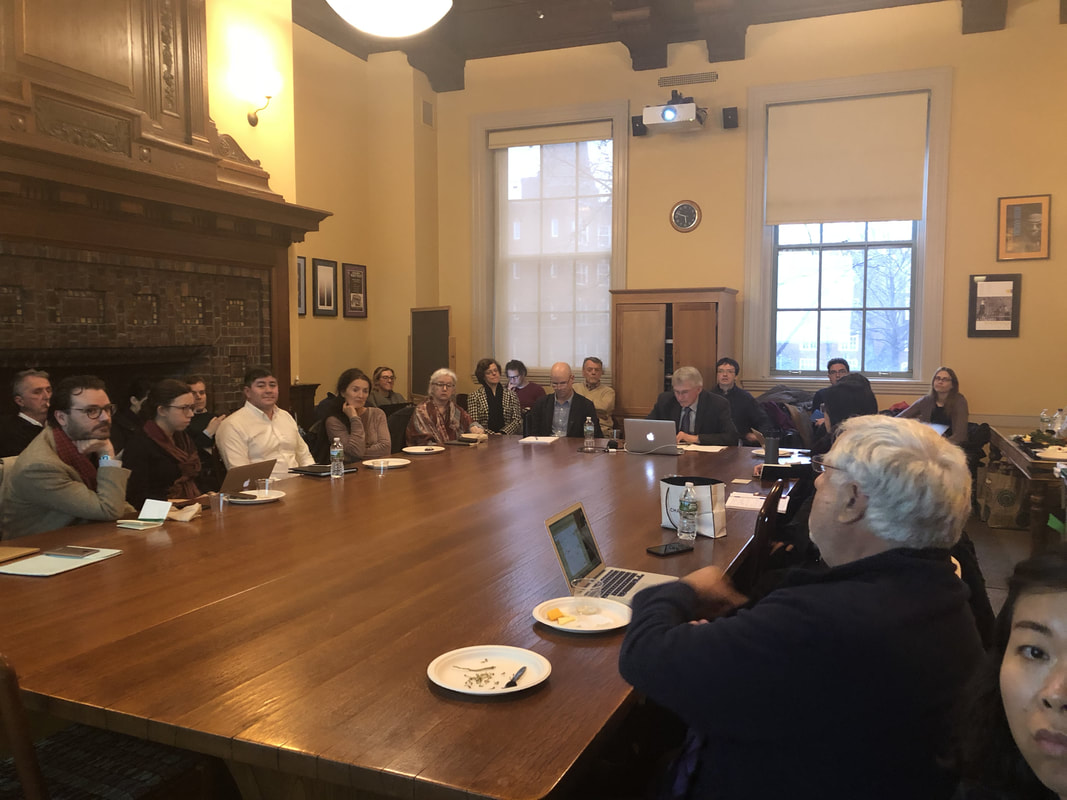 Comments are closed.
|
Archives
September 2020
Categories |
 RSS Feed
Proudly powered by Weebly